
Vitamin C is good for your skin for four reasons: it is needed for collagen formation, it is a strong antioxidant against free radicals, it inhibits the enzyme that produces pigment spots, and it strengthens your skin barrier. Those effects are scientifically well supported — not what an influencer claims, but what EFSA has officially approved for the claim *Vitamin C contributes to normal collagen formation for the normal function of skin*.
Important: it only works under conditions. A serum needs at least 4 percent vitamin C to do anything, oxidises quickly when stored incorrectly, and orally more than 500 mg per day has no extra effect. Below we explain part by part what works and what does not — from our own salon experience and from the research we rely on.

What vitamin C actually does for your skin
Four functions — no more, no less. The claim that vitamin C can do everything, from erasing wrinkles to curing acne, is marketing. The claim that vitamin C does nothing is also not true. Reality sits in between.
One — collagen formation. Vitamin C is an indispensable cofactor for the enzymes that build collagen. Without enough vitamin C your skin literally fails to build firm collagen. This is the only skin claim EFSA has officially approved for vitamin C.
Two — antioxidant. Free radicals from UV light, air pollution, and stress damage skin cells and accelerate ageing. Vitamin C neutralises them, especially in combination with vitamin E.
Three — pigment regulation. Vitamin C inhibits the enzyme tyrosinase that produces pigment. As a result, age spots and sun damage fade slowly — several weeks to months of consistent use.
Four — barrier support. Vitamin C helps produce barrier lipids so your skin retains moisture better. This is the least spectacular effect but the most directly noticeable.

Topical versus food — two different routes
Oral and topical vitamin C are not the same story. Both work, but through different channels.
Vitamin C from food reaches all tissues via your blood, including your skin. Orange, kiwi, pepper, broccoli, strawberries — a few portions a day cover your needs. Above 200 mg per day your gut absorbs less (saturation), and above 500 mg per day you get no extra skin effect, just more waste flushed out. The Dutch Voedingscentrum recommends 75 mg per day for adults.
Vitamin C in a serum works locally and reaches higher concentrations in the upper skin layers than oral vitamin C ever can. But only if the concentration is high enough (at least 4 percent, ideally 10 to 20 percent), the pH is below 3.5, and the serum is not oxidised.
The practical conclusion from our salon: do both. Food for the foundation (collagen formation happens from the inside), serum for the visible effect on pigment and glow. Anyone using only serum without sorting out their nutrition is missing the foundation.

How to actually use vitamin C well
Four practical rules that make the difference between working and not working.
Concentration. Below 4 percent vitamin C in a serum does almost nothing. Above 20 percent the effect does not scale proportionally and you risk irritation. The sweet spot for most skin types is 10 to 15 percent L-ascorbic acid, or a comparable dose of ascorbyl glucoside or tetrahexyldecyl ascorbate for sensitive skin.
Pair with vitamin E and SPF. Vitamin C and vitamin E reinforce each other as an antioxidant duo — research shows the combination is up to four times more effective against UV damage than either alone. And always sunscreen during the day. Vitamin C does not protect against UV, but it works alongside it.
Order in your routine. On cleansed skin, before your cream, preferably in the morning. Thinner texture first (serum), thicker after (cream, sunscreen). Wait a minute between layers so the serum can absorb.
Storage. Vitamin C oxidises in contact with air and light — your bottle should be dark-tinted and airtight. If the serum turns orange or brown it has oxidised and no longer works (and can even generate free radicals). Keep your bottle cool and use it within three months of opening.
Vitamin C and collagen — what we see with salon clients
What we notice in practice: the difference is not in one treatment but in twelve weeks of consistency. Clients who improve their diet (more vegetables and fruit, less ultra-processed) and use a daily vitamin C serum see a noticeably softer complexion and lighter pigment spots after two to three months. Anyone who gives up after three days does not give it a fair shot.
What we do not promise: wrinkles that vanish, ten-years-younger skin, or results in a week. Vitamin C supports collagen formation — it does not conjure new skin. Anyone who claims otherwise is selling something.
Vitamin C from food: what you would want to eat daily
The Voedingscentrum recommends 75 mg per day for adults. You reach that easily with two portions of vegetables and two of fruit, if varied. Concrete sources per 100 g:
Top sources (per 100 g): red pepper 140 mg · blackcurrant 200 mg · parsley 130 mg · broccoli 90 mg · Brussels sprouts 85 mg · strawberry 60 mg · kiwi 90 mg · orange 50 mg.
Important when cooking. Vitamin C is heat-sensitive. Long cooking halves the content at minimum. Steam briefly, eat raw where you can, or add pepper at the last moment in a dish. Fresh food over supplements — the matrix of a whole vegetable or fruit (fibre, polyphenols, other antioxidants) works demonstrably better than a pill.
Storage conditions: keep vitamin-C-rich vegetables cool and use them quickly. After three days in the fridge the content has measurably dropped.

When you are better off not using vitamin C
Not for everyone, not always. The honest side you do not see in an ad.
Irritated skin or an active skin condition (eczema, rosacea flare-up, freshly peeled). Wait until your skin barrier has recovered before adding vitamin C — otherwise you amplify the irritation. When in doubt, consult a dermatologist.
High oral doses if you have had kidney stones. Vitamin C is partially excreted via oxalate. Above 1,000 mg per day this raises the risk of new stones in susceptible people.
A serum you will not finish within three months. Oxidised serum is money thrown away. Buy a smaller bottle more often rather than a large one you do not get through.
As a marketing promise for fast results. Twelve weeks of consistency is the realistic timeline for visible effect on pigment. Anyone who claims otherwise is selling something — not science.
Frequently asked questions
How much vitamin C do you need daily for your skin?
The Dutch Voedingscentrum recommends 75 mg per day for adults — you reach that with two portions of vegetables and two of fruit. Above 200 mg your gut absorbs less (saturation) and above 500 mg per day there is no extra skin effect. For topical use: a serum with 10 to 15 percent vitamin C daily in the morning.
Does vitamin C serum work better than vitamin C from food?
Neither is better — they work through different channels. Food supplies the building blocks for collagen via your bloodstream (the EFSA claim is based on this). Serum works locally and reaches higher concentrations in the upper skin layers. The combination gives the best result. Anyone using only serum without healthy food is missing the foundation.
Can you overdose on vitamin C?
Orally it is hard — anything above 1,000 mg per day is mostly flushed out. It can however raise the risk of kidney stones in those predisposed. Topically you can irritate your skin at concentrations above 20 percent or with daily use on already sensitive skin. Start low (10 percent); ramping up is always possible.
What is the best concentration of vitamin C in a serum?
10 to 15 percent L-ascorbic acid is the sweet spot for most skin types. Below 4 percent it does almost nothing. Above 20 percent the effect does not scale proportionally and irritation risk rises. For sensitive skin: ascorbyl glucoside or tetrahexyldecyl ascorbate in a comparable dose — gentler derivatives, slower acting.
How do you know if your vitamin C serum still works?
Colour is the check. Oxidised serum turns orange or brown — at that point it does nothing and can even generate free radicals. Keep your bottle dark and cool, use it within three months of opening, and pick a dark-tinted, airtight bottle as packaging.
Can you combine vitamin C with retinol or niacinamide?
Vitamin C with niacinamide is fine — research shows they do not antagonise each other, despite old internet myths. With retinol it works too, provided you use them at different times: vitamin C in the morning, retinol at night. Layering them at once raises the risk of irritation.
A Forever product that aligns with this topic
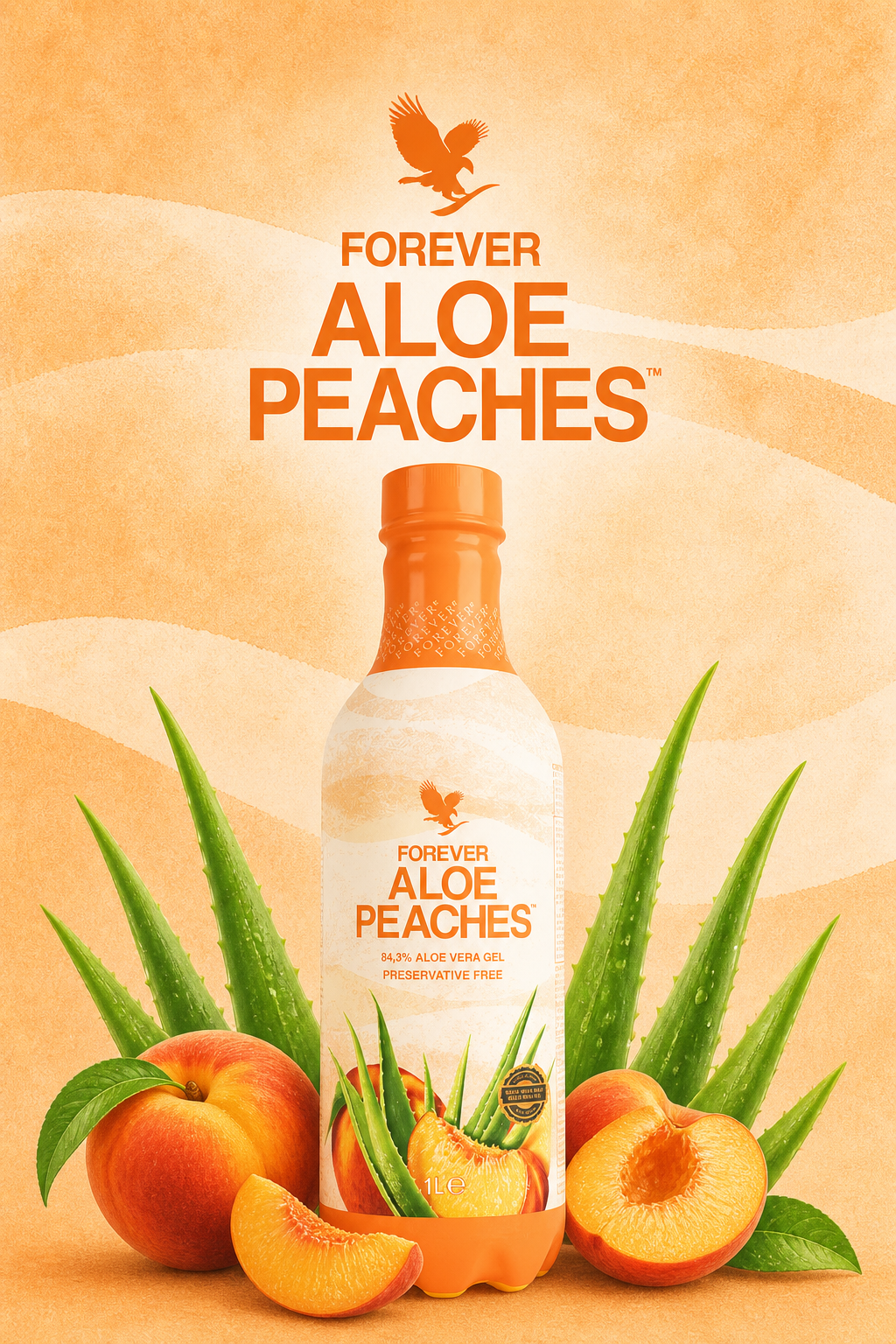
Forever Aloe Peaches
84.3% pure aloe vera gel with vitamin C
Vitamin C contributes to normal collagen formation for the normal function of skin.
A drink that, alongside your diet, supports the collagen formation that nourishes your skin from within — in addition to any topical vitamin C in a serum. Not a replacement for vegetables and fruit, but a useful addition.
A food supplement is not a substitute for a varied, balanced diet and a healthy lifestyle.