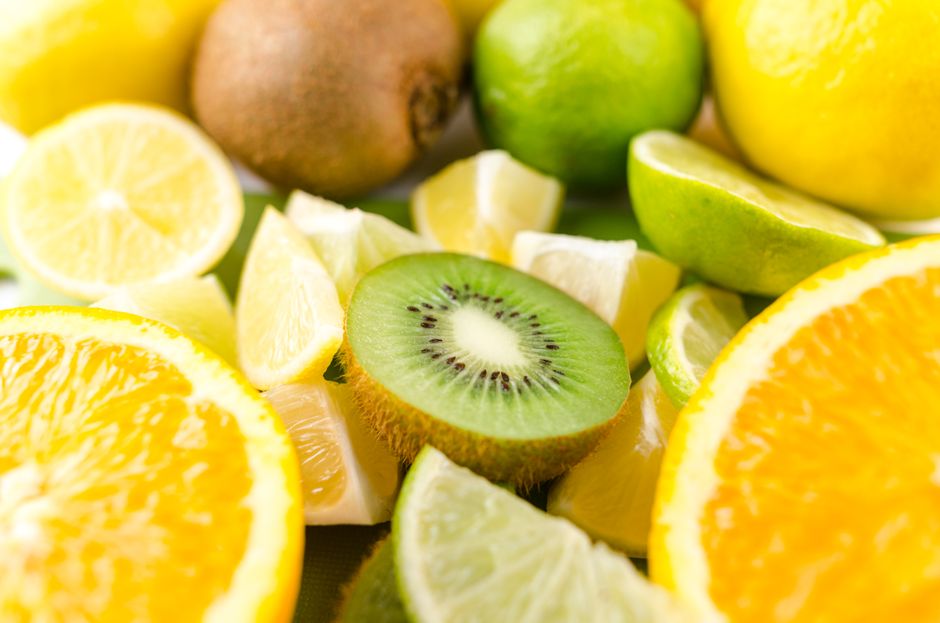
Vitamin C in food is most easily covered by daily vegetables and fruit. The Dutch recommended daily allowance for adults is 75 mg per day (Voedingscentrum). One red bell pepper provides more than double that. One kiwi sits close to the full daily need. In other words: for most people, a supplement is unnecessary.
This article sets out what vitamin C does in your body, which foods hold the most, how to keep it intact while cooking, and when a supplement is genuinely useful. No marketing, no dramatic health claims — only what the official sources say.
What does vitamin C do in your body?
Vitamin C has six EFSA-recognised functions. It contributes to the normal function of the immune system, including during and after intense physical exertion. It is needed for collagen formation, the protein that gives skin, cartilage, bones and blood vessels their strength. It supports the absorption of iron from plant-based food — a glass of orange juice with a spinach salad is no culinary accident.
It also acts as an antioxidant that protects cells from oxidative stress, contributes to a normal energy metabolism, and helps reduce fatigue. Those are the claims allowed on a product label. Any other effect you read about online is either subject to ongoing research or not recognised by the European food authority.

Where is vitamin C most concentrated?
The ranking surprises many people. Orange does not top the list. Here is the top, measured in mg per 100 grams (source: Voedingscentrum, AOV):
Kale: 130 mg. Red bell pepper: 150 mg raw, about a third less after cooking. Brussels sprouts: 150 mg raw, 92 mg cooked. Broccoli: about 90 mg cooked. Blackcurrants: 150 mg. Kiwi: 80 mg. Strawberries: 60 mg. Orange: 50 mg. Potatoes: 15 mg — not much per 100 g, but with an average portion of 150 g it still adds a measurable amount.
In other words: half a pepper or two kiwis per day covers your need. Rotating between four or five sources during the week is wiser than repeating one — vitamin C is not exclusive to citrus.

How much vitamin C do you need per day?
The Dutch Health Council and Voedingscentrum give these reference values:
Adults from 18: 75 mg per day. Pregnant women: 85 mg. Breastfeeding women: 135 mg. Children 1-3: 25 mg. Children 4-8: 30 mg. Children 9-13: 45 mg. Smokers: 35 mg on top of the standard RDA — smoking depletes vitamin C faster.
On an average Dutch eating pattern (two pieces of fruit, 200 g of vegetables per day) you typically reach 80 to 130 mg. Deficiencies in the Netherlands are rare. Anyone not hitting the two-fruit, 200-gram-vegetable guideline has a different problem than vitamin C — that person is missing several micronutrients at once and will not solve it with one supplement.

How do you preserve vitamin C while cooking?
Vitamin C is water-soluble and heat-sensitive. Two facts with practical consequences:
Short cooking in little water preserves the most. Steaming loses less than boiling. Stir-frying loses even less. Brussels sprouts steamed for four minutes retain roughly two thirds of their vitamin C; fifteen minutes in a full pot of water leaves about half.
Cut just before preparing. Slicing peppers an hour ahead and putting them in the fridge costs you 10-20% through air contact. Same goes for orange juice that sits in the bottle for a day versus juice you just pressed.
Raw is usually better. A salad with peppers, a handful of strawberries as dessert, a kiwi at breakfast — simple additions that achieve more than a complex preparation plan.

When does a vitamin C supplement make sense?
For most people a vitamin C supplement is unnecessary. A supplement can be useful in specific situations: after surgery, during a long illness, on a diet that severely restricts vegetables and fruit, or when a doctor or dietician recommends it based on blood values.
What we do see work in our salon practice is an aloe vera drink with vitamin C as part of a daily routine. Forever Aloe Peaches and Forever Aloe Berry Nectar both contain pure aloe vera gel and are rich in vitamin C. Aloe Peaches is rich in vitamin C and free from preservatives; Aloe Berry Nectar combines aloe vera with cranberry and apple. Not as medicine — as an addition alongside a varied diet.
A note you rarely hear in a sales pitch: vitamin C from food is used by your body more efficiently than vitamin C from a high-dose supplement. Above 200 mg per day, your body excretes most of the surplus through urine. Megadoses of 1000 mg or more cause stomach issues and diarrhoea in some people. More is not better.
When you are better off not taking extra vitamin C
Three situations in which a supplement is counterproductive or risky.
Anyone with kidney stones or a predisposition to them. High doses of vitamin C raise oxalate excretion in urine, which can increase the risk of kidney stone formation. Always discuss this with your GP.
Anyone with iron-overload disease (haemochromatosis). Vitamin C boosts iron absorption, which is harmful in this condition.
Anyone expecting it to prevent colds. The evidence is thin. Research points to a slightly shorter illness duration with daily intake of at least 200 mg, but not to prevention. Vitamin C is not a shield against viruses — a healthy diet, enough sleep, and hand hygiene do more.
When in doubt: GP or dietician. Not us, not a blog, not the assistant at the chemist.
Frequently asked questions
How much vitamin C does an adult need per day?
75 mg per day for adults from 18. Pregnant women 85 mg, breastfeeding women 135 mg, smokers 35 mg on top of the standard allowance. Source: Dutch Health Council and Voedingscentrum.
Which foods contain the most vitamin C?
Red bell pepper (150 mg per 100 g raw), blackcurrants (150 mg), Brussels sprouts (150 mg raw), kale (130 mg), broccoli (around 90 mg cooked) and kiwi (80 mg) lead the list. Orange sits at 50 mg per 100 g, lower than many people assume.
Does vitamin C help against colds?
The evidence for prevention is thin. Studies show a slightly shorter illness duration on a daily intake of at least 200 mg, but no strong preventive effect. For someone already getting 75 mg from food, additional supplementation is not meaningfully evidenced for cold prevention.
Can I get too much vitamin C?
Hardly from food — surpluses leave the body through urine. From supplements yes: doses above 1000 mg per day can cause stomach issues, diarrhoea, and in sensitive people kidney stones. The European safety limit is 2000 mg per day for adults.
Is vitamin C from food better than from a supplement?
For people without a deficiency: yes. Food contains, alongside vitamin C, flavonoids, fibre, and other compounds that support its function. With a confirmed deficiency, after surgery, or with specific conditions, a supplement can be useful — discuss it with your doctor or dietician.
How do I keep as much vitamin C as possible during cooking?
Short cooking in little water or steaming preserves more than long boiling. Cut just before preparing — air breaks vitamin C down. Eat raw where you can: peppers, kiwi, strawberries, and berries deliver the most uncooked.