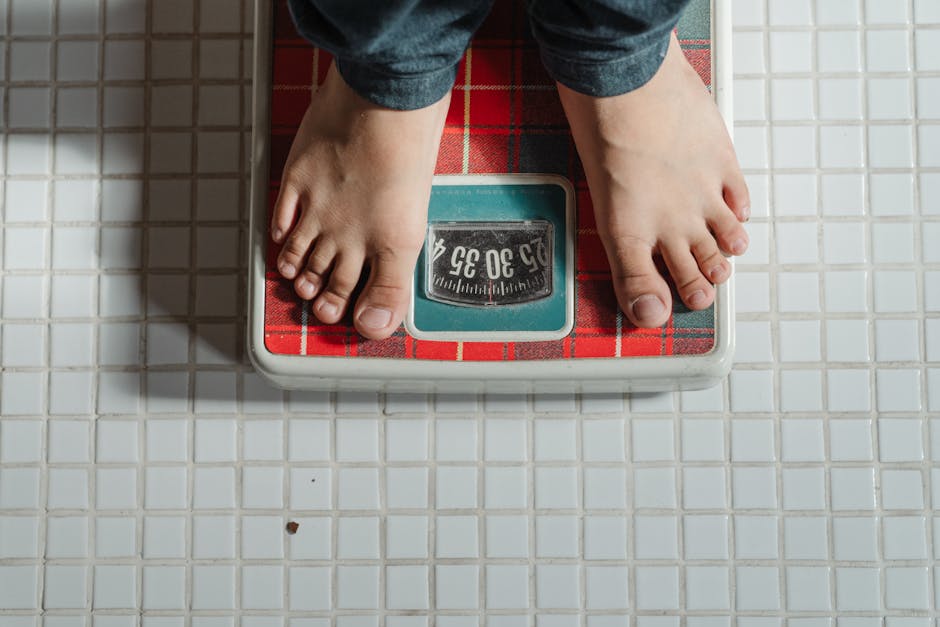
Natural weight loss does not work through a diet but through adjusting daily habits. Half to one kilo per week is what Voedingscentrum and the Hartstichting call realistic and healthy — faster than that and you mainly lose fluid and muscle, and you build up your chances of regain.
Below are eight steps, ranked by effect-per-effort. The first four are doable daily without buying anything new. The last four demand more attention. And at the bottom: when this should not be done alone, and you are better off involving a dietitian or GP.
1. Set a realistic goal: 0.5 to 1 kilo per week
Anyone wanting to lose ten kilos in two months goes down hard. Anyone wanting to lose ten kilos in twenty to forty weeks triples their chance of success, according to long-term studies in weight management.
The difference is not arithmetic, it is psychology. A diet that produces quick results demands extreme choices (too little food, cutting everything out) that are rarely sustainable beyond a few months. Then the regain comes — and for many, the weight after a year sits higher than before. The yo-yo effect is no myth.

2. Eat protein at every meal
Protein does three things at once: it satiates longer than carbohydrates or fat, it costs your body more energy to digest (80 to 100 calories per day in extra burn), and it protects your muscle mass during weight loss.
Practical: aim for 25 to 30 grams of protein per main meal. An egg (6 g), a portion of quark (15 g per 150 g), a portion of chicken or fish (25 g per 100 g), a bowl of lentils (18 g per cup) — combine to taste. Anyone who mostly eats bread-and-jam for breakfast will feel the difference within a week.

3. Choose whole foods, limit ultra-processed
Whole foods — vegetables, fruit, pulses, whole grains, nuts, lean meat, fish, eggs, low-fat dairy — have a lower energy density than ultra-processed food. You eat more volume for fewer calories, feel full sooner, and get more micronutrients.
Ultra-processed food (ready meals, snacks, soft drinks, biscuits, bars) is designed by manufacturers so that you have trouble stopping — combinations of sugar, fat, and salt that bypass your satiety system. You do not have to eliminate it entirely, but bring it back to less than a fifth of what you eat.
A tip most people underestimate: liquid calories count. A glass of orange juice, a latte with syrup, a beer — together easily 500 calories a day that you barely notice. Water, tea without sugar, and black coffee cost you nothing.
4. Drink one and a half to two litres of water per day
Research suggests that half a litre of water raises calorie burn over the next hour by 24 to 30 percent (although the absolute effect is small). More importantly: water before a meal reduces what you eat, and good hydration prevents your body from mistaking thirst for hunger.
Practical: one glass with each meal, one with each break, one before bed. Voedingscentrum names one and a half to two litres of fluid per day as a guideline — coffee and tea without sugar count too.

5. Move daily: not only sport
Three workouts a week is good, but your daily unconscious movement — what researchers call NEAT, non-exercise activity thermogenesis — accounts for two to three times more calories than dedicated training in non-athletes. In other words: the more you sit, the less your body uses.
Practical: ten minutes of walking after each meal, taking the stairs, standing during phone calls, cycling for distances up to five kilometres. Together these habits add up to more than an hour in the gym if the rest of your day is sedentary.
For those who do sport: a combination of strength training (twice a week, preserves muscle mass during weight loss) and cardio (two to three times a week, thirty to sixty minutes moderate intensity) is the most researched recipe. Beginners do well to build the daily movement first before adding sport.
6. Sleep seven to eight hours per night
Sleep deprivation demonstrably increases the chance of overweight — research points to a 5 percent higher obesity risk per hour of sleep below 7. The mechanisms are clear: less sleep disrupts hunger and satiety hormones (ghrelin up, leptin down), which makes you crave more, especially calorie-dense food.
Anyone losing weight without sleeping enough loses on average more muscle mass and less fat than someone who does sleep well. Sleep is not a nice extra in a weight-management plan — it is one of its pillars.

7. Eat slowly and recognise emotional eating
It takes twenty minutes for your stomach to signal your brain that you are full. Anyone clearing a plate in ten minutes structurally eats more than needed — simply because the signal arrives too late. Eat slowly, put your fork down between bites, chew enough.
Emotional eating is a separate category. Anyone eating in response to stress, boredom, or sadness does not resolve the underlying feeling with a snack, but does make weight loss harder. Keeping a small notebook of when you eat and how you felt makes patterns visible within two weeks.

8. A structured kick-start: C9, DX4 or F15 as an option
For anyone wanting structure and a fixed time frame, Forever offers three programmes that can serve as a kick-start: the 4-day DX4, the 9-day C9, and the 15-day F15. All three combine eating schemes with an exercise plan, recipes, and the familiar Forever food supplements. Not a replacement for a lifestyle change — but a structured way to start for someone who cannot find the first step alone.
DX4 is a 4-day programme, intended to be repeated quarterly as a reset. C9 is a 9-day programme that helps you make a flying start toward a fitter version of yourself — eating schemes, an exercise plan, recipes, and tips for a healthy lifestyle. F15 is longer, fifteen days, and brings food and movement into balance with targeted exercises for muscle building — intended for those who want to go beyond a short kick-start and make the step toward a lasting routine. All three show you what a fixed structure can mean daily for your food and movement — the steps 1 through 7 above remain the pillars you build on afterwards.
What we see in our salon practice: programmes work for people who want a clear starting moment and fail for people who hope the four, nine, or fifteen days will solve the whole problem. The effect depends on what you do afterwards, not on the programme itself. That is why we guide clients personally when they follow one of these programmes — not as a salesperson, but as someone who has seen what a targeted start can deliver.
Important before you start. A food supplement is not a substitute for a varied, balanced diet and a healthy lifestyle. Are you on medication or under medical treatment (for example for diabetes or heart conditions)? Consult your doctor first before starting an exercise programme or food supplement. Forever F.I.T. (C9, F15, Vital5) is not suitable during pregnancy, when trying to conceive, or while breastfeeding.
9. What does NOT help: crash diets, weight-loss pills, wonder supplements
Time for the honest aside you rarely read in a sales message: most weight-loss attempts via a diet fail long term. Not because the diet was 'wrong', but because a diet is by definition temporary and your underlying habits stay the same. Voedingscentrum states this explicitly.
Crash diets (below 1200 kcal per day, or complete exclusion of a macronutrient) lead in the majority to regain within a year — and the lost weight often returns with extra kilos, because your resting metabolism temporarily drops.
Weight-loss pills and 'natural fat burners' have no EFSA-approved claim for weight loss in the EU. What is in the bottle (green tea extract, glucomannan, l-carnitine) has limited effects in studies — not what an € 80 subscription justifies. The active ingredient is cheaper and better-quality in ordinary food.
Wonder supplements with exaggerated promises demand extra caution — also in our own industry. High price plus before-and-after photos plus 'cure' marketing with speed claims (10 kilos in 30 days, guaranteed fat-burning) is almost always the pattern of a product without evidence. The difference between a F.I.T. programme like C9, DX4 or F15 as described above and that kind of marketing message: the Forever programmes promise a structured kick-start, not a guaranteed result.
10. When you are better off involving a dietitian or GP
Self-help works for most people with moderate overweight and a healthy lifestyle base. It does not work for every situation. Call your GP or ask for a referral to a dietitian in these cases.
BMI above 30 (obesity). The GP can refer you to weight guidance through the Combined Lifestyle Intervention (GLI in the Netherlands), partly covered by basic insurance.
Signs of an eating disorder: secret eating, binge eating, compulsive weighing, intense fear of weight gain. This is a medical situation and not a lifestyle question.
Unexplained weight loss without any change in your habits. Could have an underlying cause that a doctor needs to rule out.
Diabetes, heart disease, or another chronic condition. A dietitian tailors the weight plan to your medication and blood values — self-help can be unsafe here.
A GP appointment takes fifteen minutes. The follow-up path — dietitian, exercise coach, possibly endocrinologist — gives a better chance of lasting result than ten years of consecutive diets.
Frequently asked questions
How many kilos per week is healthy to lose?
Half a kilo to one kilo per week, according to Voedingscentrum and the Hartstichting, is a realistic and healthy pace. Faster than that and you mainly lose fluid and muscle, and you increase your chance of regain. Losing ten kilos at this pace takes twenty to forty weeks — a trajectory, not a sprint.
What is the best way to lose weight naturally?
A combination of enough protein (25-30 g per main meal), whole foods (less ultra-processed), enough water, daily movement, and seven to eight hours of sleep. No single tip is decisive; combination and consistency determine the result.
Do weight-loss pills or natural fat burners work?
EFSA has not approved any weight-loss claim for commercial weight-loss supplements. The active ingredients in these products (green tea extract, glucomannan, l-carnitine) show limited effects in studies — not enough to justify a high price. Food and movement are better evidenced and cheaper.
Why is my diet not working?
Most diets 'work' short term but fail long term because a diet is temporary and your underlying habits stay unchanged. Voedingscentrum emphasises this: lasting weight loss requires a lifestyle change, not a finite diet. Anyone who falls back into old habits almost always regains.
How much protein does an adult need per day to lose weight?
During weight loss, 1.2 to 1.6 grams of protein per kilo of body weight per day is recommended to preserve muscle mass. For someone of 70 kilos that is 84 to 112 grams per day, spread across three to four meals of 25 to 30 grams.
When should I consult a dietitian or GP?
With a BMI above 30, signs of an eating disorder, unexplained weight loss, or a chronic condition like diabetes or heart disease. A dietitian via the GP is partly covered through the Dutch Combined Lifestyle Intervention (GLI) in basic insurance.